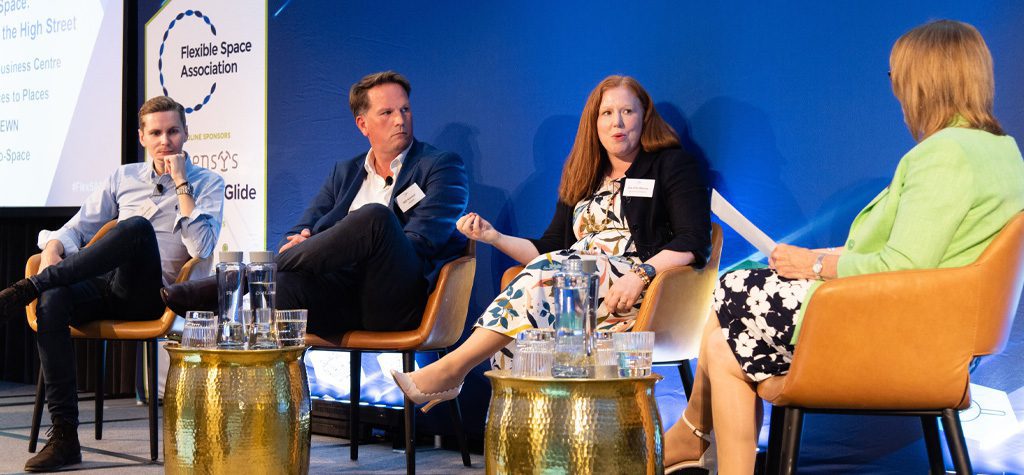


This article draws on the findings from our June 2026 webinar, Where to Be and Not to Be. Watch the full session below, or read on for the analysis.
More than half of UK flex providers say 2026 has been harder than expected. Mill House Woburn, Rume2 in Chichester, and The Home Office in Tring have all closed in recent months. Each was under 8,000 sq ft. Each sat at the coworking end of the market.
That is not a story of demand collapsing. It is a story of demand moving, and some providers not moving with it.
It is also a story of scale and operational real estate. Running an independent flexible workspace without enterprise-led demand from corporates is an increasingly difficult proposition. Corporate occupiers bring longer commitments, larger footprints, and more predictable revenue. Without them, occupancy is volatile, revenue per desk is lower, and the building’s operational overhead is harder to absorb.
UK flex office demand is redistributing, not shrinking. Providers who understand where it is going are filling space faster, negotiating stronger terms, and opening in the right places. Those who don’t are finding that instinct and pipeline-following are no longer enough.
Reactive planning is now a risk, not a strategy
For most of the flex market’s history, a reactive approach to location planning was rational. Find a building, follow the development pipeline, watch what competitors open, respond to broker calls, take secondary stock at lower rents, and estimate local demand. When market data was thin and occupier intelligence was hard to access, following the pipeline was a reasonable proxy for following demand.
That calculation has changed. The data available now means reactive planning is no longer a safe default. It is a competitive disadvantage.
Providers making proactive decisions are leading with open data signals: mapping where companies are forming, tracking spin-outs and seed rounds, targeting under-supplied catchments, and building for a defined occupier profile. They’re consistently finding better sites, negotiating stronger terms, and filling space faster, because evidence is informing the decision before they commit.
Who is actually taking space
UK demand is redistributing across three distinct occupier groups, each with a different location signal, product requirement and commercial profile.
Established tech, professional services and financial services
These occupiers aren’t going anywhere. They still dominate the flex market. But their requirements have evolved, and the shift is clear: toward enterprise-grade specification, scalable suites, managed office formats and environments that give businesses real control without the liability of a long lease. Bruntwood’s Plaza in Liverpool is a useful benchmark, a well-located, well-specified product anchoring enterprise and professional services occupiers in a regional city. The question for any provider is whether their product has kept pace with where these occupiers are now, or whether it’s built for a version of demand that no longer exists.
AI, life sciences, climate tech and defence
CBRE research shows AI firms accounted for 34% of London tech office take-up in 2025, up from 4% a decade ago. Of 100 leading AI startups in London, 75 operate from flexible workspaces. Almost half of the deals are concentrated in the King’s Cross-Euston Knowledge Quarter, where DeepMind, Google, Meta, and Microsoft cluster around Cambridge transport links and university talent.
What sets these occupiers apart is that location is a strategic decision, not just a practical one. They choose an address that signals something about their neighbours, their talent pipeline and their investor proximity. They cluster deliberately, and where clusters form, demand deepens and sustains. Providers positioned inside or adjacent to these clusters hold a structural advantage, whether or not they’ve built that into their positioning and pricing.
Non-traditional occupiers: the overlooked opportunity
This group represents the biggest missed opportunity in the market right now. Wellness and mental health practitioners, SEND and neurodiversity consultants, education and skills providers, private healthcare, sustainability consultancies, e-commerce sellers, and content creators. Sustainable ventures in County Hall. Reformer Pilates studios in serviced offices. Private kids’ dentists in Hammersmith. Speech and language support in Battersea Business Centre.
These are not edge cases. They’re emerging across suburban, regional and city centre markets alike. They need professional space, part-time access and a credible business address. They don’t need a five-day desk. Once they find an environment that works, they stay. Retention in this group is high, revenue per square foot through room hire and hot-desking is solid, and the occupier mix creates a community that feels genuinely active. If any of these occupiers are already coming through your door, that’s a signal worth acting on.
Where clusters are forming
CBRE’s analysis of London’s AI market shows how concentrated and intentional the clustering of AI-native firms already is. It’s an established and intensifying pattern across specific London submarkets. If you’re in or near those zones, that proximity is a competitive asset worth building into your positioning and pricing.
Outside London, Silicon Spa, the gaming and technology cluster around Leamington Spa, is the reference point. Proximity to Warwick, Coventry and Birmingham universities built the initial conditions, but what sustained it was a spin-out effect: as studios grew, experienced developers left to found new companies, creating a self-reinforcing ecosystem. That is the pattern worth identifying, not a single anchor, but the conditions that generate secondary and tertiary demand over time.
The Cambridge-Oxford-London corridor is the other clear signal: AI-native firms, frontier R&D, science parks and high-spec space deepening at pace, drawing strong international interest.
The data now exists to identify where the next cluster forms before competitors do. That is what proactive location planning looks like in practice.
Six questions every location decision needs to answer
A credible location decision rests on clear-eyed answers to six questions.
Demand. Is there evidence of genuine demand: active flex occupancy nearby, broker enquiries in the market, a growing SME ecosystem? Not potential. Evidence.
Sector. Does the location serve the talent pool your target occupiers need to hire from? Occupiers follow talent. If the talent isn’t there, neither are the occupiers.
Opportunity. Is there a landlord motivation, an infrastructure catalyst or a product gap that creates a structural advantage you can exploit?
Viability. Can you deliver the occupancy and rent the model requires? If the numbers only work at 90% occupancy, the model is not viable.
Competition. Is the product gap genuine, or are you about to become the fourth provider in a market that’s already proven but full?
Strategy fit. Are you being reactive or proactive, and is that the right posture given your capital position and risk tolerance right now?
One no is a reason to pause. Two no’s is a reason to walk away. The framework is not designed to kill deals. It’s designed to stop providers rationalising bad ones. Sometimes, the most valuable output from a rigorous location analysis is the confidence to say no.
Putting the data to work
The six questions are the starting point. A bespoke analytical model is what makes them defensible in front of a board, a lender, or an investor.
Each dimension becomes a data layer. Demand becomes occupancy data, broker enquiry volumes, and business formation rates by submarket. Labour becomes a commuter catchment and skills availability. Opportunity becomes a read of landlord incentives, investment zone designations, and supply pipeline. Viability is assessed using a bottom-up financial model tested at realistic occupancy levels. Competition becomes a structured competitor audit with product positioning mapped against it.
The gap analysis that results uses population-per-workspace ratios to identify the highest-opportunity submarkets: places where demand signals are strong but supply is structurally thin. That is the difference between opportunistic expansion and strategic growth.
If you want to talk through what that kind of analysis would look like for your business, get in touch at spacestoplaces.co.uk/contact.