
Image courtesy of Technology Within
The UK office market is not contracting. It is bifurcating. What UKREiiF 2026 made clear across 3 days of panels and conversations in Leeds is that the gap between assets that perform and assets that stagnate is widening. The decisions landlords and investors make in the next 12 to 24 months will determine which side of that gap their portfolio sits on.
The occupier brief has fundamentally changed
The most important message from the Bidwells panel, Rethinking Office Space for the AI Era, was not about return-to-office mandates or hybrid working policies. It was about what occupiers now need from the space when they get there.
Sue Foxley, Research Director at Bidwells, framed it directly: demand is not softening, it is structurally reallocating. The AI-native firms that are driving a significant proportion of current leasing activity are not choosing space on square footage. They are choosing it on whether it supports the work they cannot do remotely: collaboration, culture-building and the social infrastructure that holds a fast-scaling team together.
Gareth Fisher at Atos described the test that should now be applied to any building competing for quality occuipers: how long does it take from walking in to actually contributing in a meeting? Not the amenity package. Not the EPC rating. Time to contribution. If that number is high, the building is failing, regardless of what else it offers.
Jane Hutchins at Cambridge Science Park made the pull of place concrete. Cambridge Science Park is planning to quadruple its accommodation in direct response to occupier demand that AI is not diminishing, it is concentrating. Stephen Muclair at 3RE Capital Ventures put numbers on the AI-native growth story: OpenAI from flex to 100,000 sq ft in two years. London looking at 2.5 million sq ft of additional AI-driven demand by 2033.
For landlords, the implication is clear. Buildings designed around the assumption that occupiers need rows of desks and quiet focus space are increasingly misaligned with the market. The office has a new job descriptio.
The £10m question every regional asset owner is facing
TFT’s session was the most practically useful exercise of the week for anyone holding regional stock. The case study, a fictional Grade B multi-let office in Central Leeds called ‘The Tenner Works’ mapped exactly the situation facing hundreds of asset owners right now.
Late 1990s build. EPC C from 2018 with ageing MEP. 60% occupied, with lease breaks. No amenity. A budget of £10m and 12 options for how to spend it, adding up to more than the budget allows.
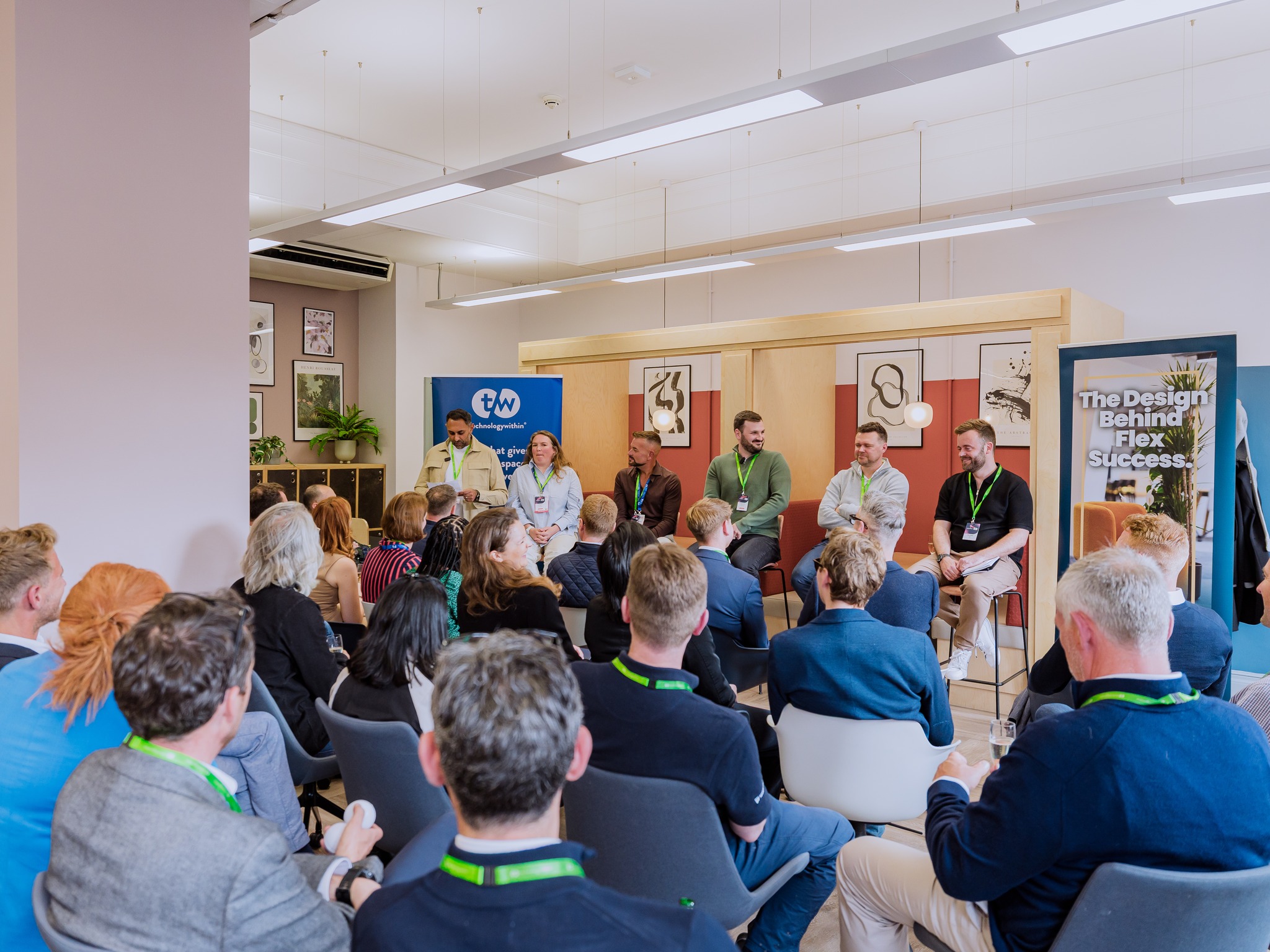
Chaired by Gemma McKenzie-Rogers at TFT, the panel brought four distinct positions. Emily-Rose Garnett at UKGBC argued for EPC A upgrades, future-proof against tightening regulation or to keep absorbing the penalty. Nick Canacott at Blend Technology Consultants said digital infrastructure is no longer a differentiator; it is the baseline that occupiers expect. Miles Jones at Federated Hermes MEPC made the case for amenities and user experience. Eric Chong at BCO brought the occupant-wellbeing and workplace-design lens.
What the session surfaced is the conversation that asset managers of older regional stock are having. Capital allocation for buildings like The Tenner Works cannot be driven by trend or template. It requires honest local market intelligence: what do occupiers in this specific location actually need, what will they pay for, and what does the ownership strategy demand? Getting that wrong means spending serious capital on a building that still underperforms.
The flex operations gap landlords still need to close
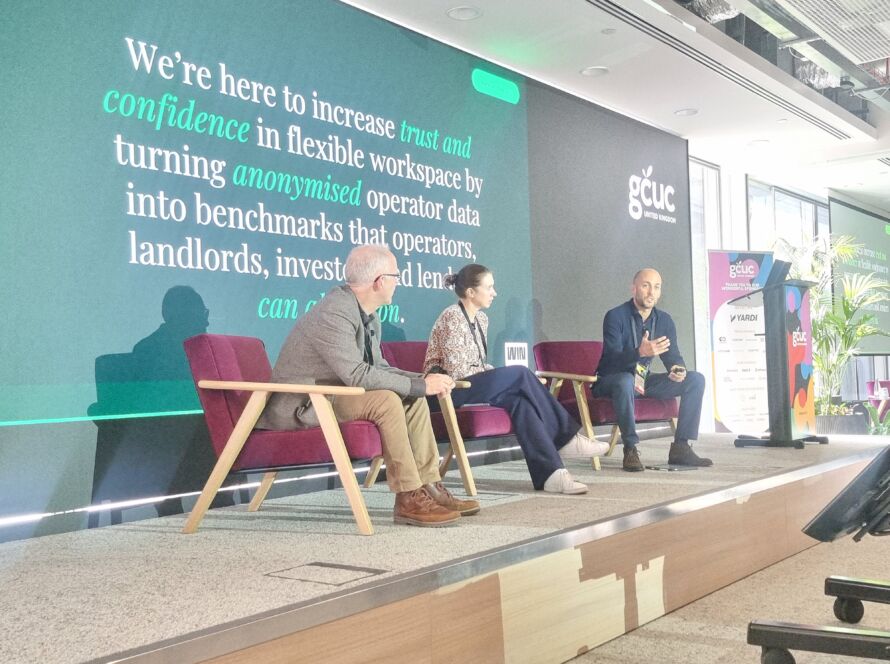
The panel hosted by Wizu Workspace, sponsored by Technology Within and Interaction, made the point that traditional real estate still undervalues operational excellence.
Josie Baum at ARC Club identified where building performance most commonly breaks down, not in the amenity package or the branding, but in the operational detail. Storage. Cleaning routes. Meeting room reset logistics. Staff movement through the building. When these are not resolved in the design, front-of-house teams spend their day compensating for layout failures rather than building member relationships. She also noted that there is still no established career path into flex operations, a structural gap the industry has not yet addressed, and one that limits the quality of the talent available to fill these roles.
Josie also made the phased fit-out case in the most direct terms: if a scheme is designed for 200 people, there is no reason to buy every chair before those people exist. Draw down capital as demand proves itself over 12 to 18 months. Chris Mapp at Wizu added that over-amenitisation is a real risk, particularly in smaller or regional markets where the right amenity mix must reflect local demand rather than a model imported from a larger city.
Steve Coulson at Kitt landed the retention argument: hospitality investment is a more efficient way to hold revenue than constant acquisition. Adam Walker at Foundry (Legal & General) and Charlie Moss at Interaction Ltd both made the point that commercial structure (lease, management agreement, hybrid or fixed-fee) should follow the asset strategy, not the other way around.
For landlords who are serious about making flex work, the question is not what to replicate from the visible surface of successful flex buildings. It is what operational capability needs to be built or brought in alongside the physical investment.
The investment case: demand is concentrating, not disappearing
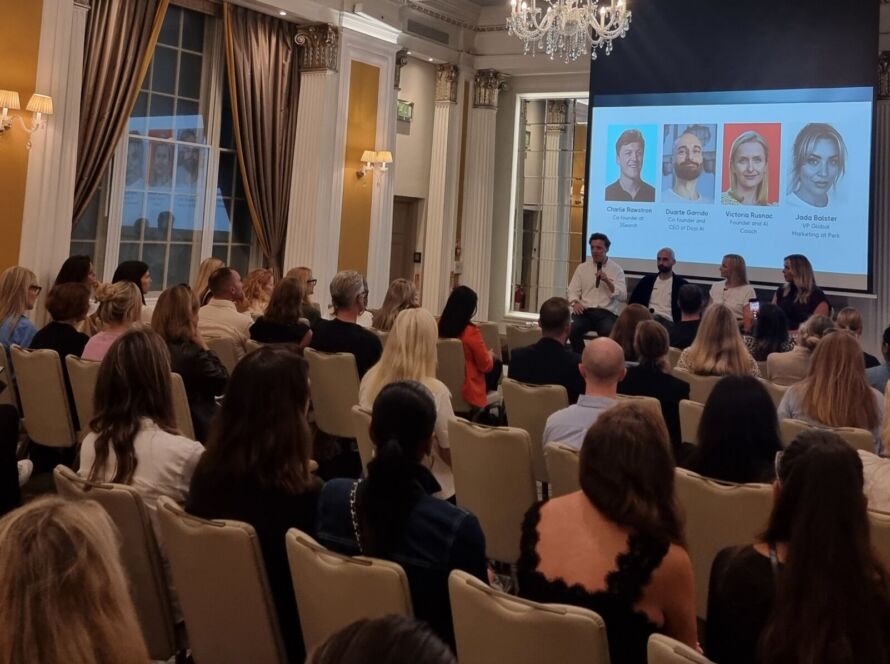
The Hot Desks & Cold Realities panel, chaired by Vanessa Forster at BNP Paribas Real Estate, addressed the market backdrop and what investors should be drawing from it.
Stafford Lancaster set the picture clearly. London prime is seeing strong rental growth. Capital is returning to the best assets. But regional markets are still below the levels needed to support new development, and obsolescence is becoming more visible in secondary stock. The market is polarising and crucially, lower uniform attendance does not translate into lower total space demand. More collaboration space, more breakout and more human-centred design is pushing space per person upward even as headcount-based occupancy falls.
Phuong Truong at WeWork made a point that applies directly to investment decisions: businesses choose flexible space because it helps them absorb risk. That is a strategic preference, not a cost-cutting measure. The ceiling for well-positioned, quality assets is higher than simple cost-per-sq-ft comparisons suggest.
Samantha McClary at BCO made the point that should inform every investor conversation: rent is a very small part of total business cost relative to the value that better space can create. The investment case for quality is stronger than the headline numbers imply.
Mark Chivers at the Cabinet Office added a public sector dimension worth noting. Physical co-location does not automatically create the collaboration and shared-service benefits that drive public sector consolidation decisions. Building design has to actively support that interaction.
What this means for your portfolio
The consensus from UKREiiF 2026 was cautious optimism. Enough demand pressure to sustain good assets. Enough structural change to penalise those who do not adapt.
For landlords and investors, the practical read across the week is this.
Regional Grade B stock requires honest capital allocation decisions, not cosmetic refreshes. The difference between EPC B and EPC A, between basic technology and smart building infrastructure, between no amenity and functional end-of-journey provision, is increasingly the difference between an asset that leases and one that does not.
Flex is not a product layer. It is an operating model that requires operational capability alongside physical investment. Landlords who treat it as a fit-out decision will continue to underperform those who understand what is actually driving retention and revenue.
The occupier brief has changed. Buildings designed for the old model of office use are not failing because of remote working. They are failing because the new kind of occupier has different requirements, and those requirements are now fundable and measurable.
Spaces to Places works with UK flex providers, from single-location businesses to those managing up to 20 sites, to build the marketing clarity and occupier intelligence that supports occupancy and long-term performance. If you are working through any of these questions on your own portfolio, we should talk.